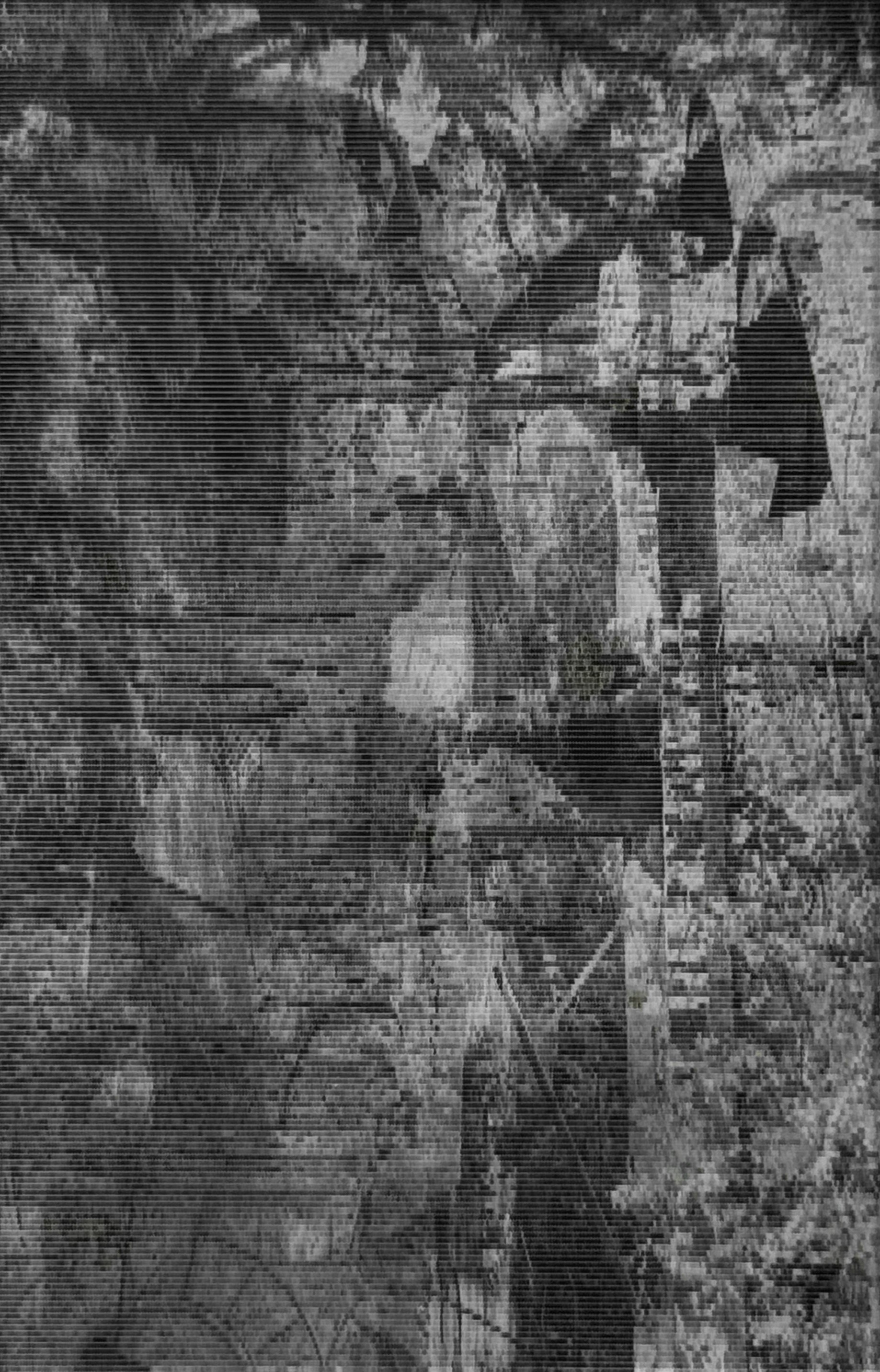

2025-ongoing
Place on the map
Akarmara was founded in 1938 as an urban-type settlement for coal mining in the Abkhaz ASSR. The industrial narrative of its formation, significant for the Soviet state, determined the emergence of this place on the globe — a fragmented territory shaped by man.
In the post-Soviet period, during the Georgian-Abkhazian War (1992–1993), Akarmara was under siege for 413 days. Following the military actions, the area lost its status as an industrial center and, for a significant portion of the population, as a place of residence.
Akarmara is currently located within the Republic of Abkhazia, existing as both a disputed territory and a destination. I create an image of the place being explored through the gaze of a tourist, under conditions of accumulating looming uncertainty, where the open, capturing, and demonstrative mode of this gaze perceiving the place is represented by layered images of objects.
Until recently, industrial relations in Akarmara continued in coal mining, but the modern economy has been based on the sale of valuable building materials on the market and organized tourism since 2019. Some of the houses of the local population are used as summer cottages.
The ontology of tourism possesses exceptional freedom and the intention to go beyond the linearity and existing experience of thought. I approach tourism from the current conditions of its belonging to the unifying actor of the globe’s layers and one of the main participants in its formation. This mode offers a space for a different experience of perception, which can become the condition for the birth of something new in the discourse of uncertainty.